Many people search for gold dollar coin value after discovering a golden-colored $1 coin in a drawer, wallet, piggy bank, or inherited coin collection. While some of these coins are worth only their face value, others can be worth hundreds or even thousands of dollars depending on their type, rarity, condition, and mint errors. Knowing the difference is the key to understanding what your coin is really worth.
The answer depends primarily on the type of coin you own, although rarity, condition, mint mark, and collector demand also play an important role. Some U.S. dollar coins are genuine gold coins minted during the 19th century and can be worth hundreds or even thousands of dollars. Others are modern coins with a golden appearance but are made from a durable metal alloy rather than precious gold. While most modern examples are worth their face value, certain rare dates, mint errors, and high-grade specimens can sell for much more.
This guide explains everything you need to know about gold dollar coin value, including how to identify your coin, what affects its price, and when it may be worth having it professionally evaluated.
What Is a Gold Dollar Coin?
The term “gold dollar coin” can describe two very different types of U.S. coins, which is why many people are confused when trying to determine value.
The first is the historic U.S. Gold Dollar, produced between 1849 and 1889. These coins contain 90% gold and were the smallest gold coins ever issued for circulation by the United States Mint. Because they are made of real gold and are now more than a century old, they are highly collectible.
The second category includes modern gold-colored dollar coins, such as the Sacagawea Dollar, Native American Dollar, Presidential Dollar, and American Innovation Dollar. These coins are legal tender and have a golden appearance because of their manganese-brass alloy, but they do not contain gold.
Knowing which type of coin you own is the first and most important step in determining its value.
A Brief History of the U.S. Gold Dollar
The U.S. Gold Dollar was introduced in 1849, shortly after the California Gold Rush increased the nation’s supply of gold. Congress authorised the new denomination to make practical use of the additional precious metal entering the economy.
The coin was designed by James B. Longacre, the Chief Engraver of the United States Mint. During its production, three major design types were issued.
Type 1 (1849–1854)
The original design features Liberty wearing a coronet. Because the coin measured only about 13 millimetres in diameter, many examples were weakly struck, making the finer details difficult to see.
Type 2 (1854–1856)
To improve the design, Liberty’s portrait was enlarged. Although visually appealing, the new design created striking challenges because of the high relief, resulting in a relatively short production run.
Type 3 (1856–1889)
The final design slightly reduced the portrait’s size, producing sharper details while maintaining an attractive appearance. This version remained in production until the denomination was discontinued in 1889.
Today, all three types are valued by collectors for their historical significance, rarity, and gold content.
Modern Gold-Colored Dollar Coins
Although many people refer to them as “gold dollar coins,” today’s circulating dollar coins are not precious-metal coins. Instead, they are made with a manganese-brass outer layer bonded to a copper core, giving them their distinctive golden colour.
Several modern dollar coin programs have been introduced over the years:
Sacagawea Dollar
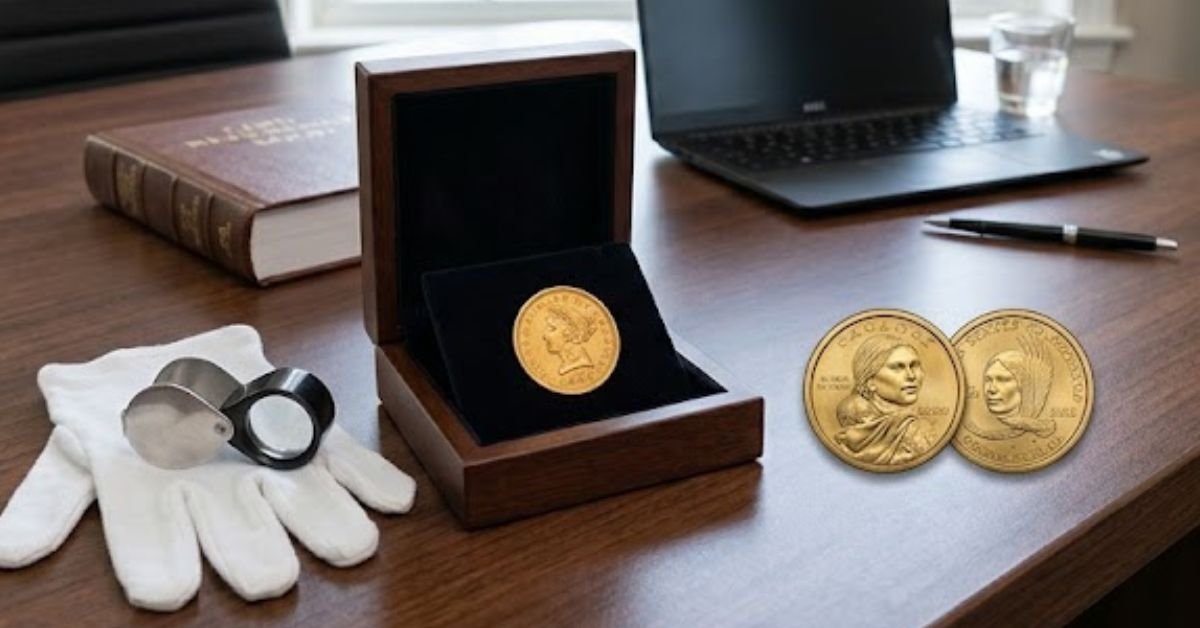
First issued in 2000, the Sacagawea Dollar features Sacagawea carrying her infant son, Jean Baptiste. It replaced the Susan B. Anthony Dollar in an effort to encourage greater public use of dollar coins.
Most circulated Sacagawea Dollars remain worth their face value. However, a few rare varieties—including the famous Cheerios Dollar and the Wounded Eagle error—are highly sought after by collectors and can command significant premiums.
Native American Dollar
Beginning in 2009, the Native American Dollar retained the Sacagawea portrait on the front while introducing a different reverse design each year to honour Native American history, culture, and achievements.
Many later issues were produced mainly for collectors rather than widespread circulation, making some uncirculated examples more desirable than their face value alone would suggest.
Presidential Dollar
The Presidential Dollar Program launched in 2007 and honoured former U.S. presidents with individual coin designs released in chronological order.
While most circulated coins are common, some authenticated mint errors—particularly examples missing their edge lettering—have become popular among collectors.
American Innovation Dollar
Introduced in 2018, the American Innovation Dollar celebrates important innovations and inventors from each U.S. state, the District of Columbia, and U.S. territories.
These coins are primarily produced for collectors and are especially popular among those building complete annual sets.
What Determines Gold Dollar Coin Value?
No single factor determines a coin’s value. Instead, collectors and dealers consider several characteristics together.
Coin Type
The type of coin is usually the biggest factor affecting value. Historic Gold Dollars minted between 1849 and 1889 generally have much higher values because they contain gold and are significantly rarer than modern dollar coins.
Modern dollar coins are typically worth one dollar unless they have unusual characteristics that make them attractive to collectors.
Year of Issue
Some years saw lower production numbers or include recognised varieties that collectors actively seek. While age alone does not guarantee value, certain dates are naturally harder to find than others.
Mint Mark
The mint mark shows where the coin was produced.
Common mint marks include:
- P – Philadelphia
- D – Denver
- S – San Francisco
Historic Gold Dollars were also struck at now-closed branch mints, including Charlotte (C), Dahlonega (D), and New Orleans (O). Coins from these historic mints often attract greater collector interest because of their lower mintages.
Condition
Condition has a major impact on market value.
Collectors generally pay more for coins with sharp details, minimal wear, and original surfaces. Coins that have been professionally graded by organisations such as the Professional Coin Grading Service (PCGS) or the Numismatic Guaranty Company (NGC) are often easier to value because their authenticity and condition have already been verified.
Rarity
Coins with low mintages, limited surviving populations, or recognised mint errors are generally worth more than common issues.
Collectors often look for:
- low-mintage dates
- discontinued varieties
- authenticated mint errors
- unusual die varieties
Collector Demand
Market demand also plays an important role. Certain coins become more valuable as collector interest grows, while prices for more common issues may remain relatively stable for years.
Can Mint Errors Increase a Coin’s Value?
Yes. Verified mint errors can make an otherwise ordinary dollar coin considerably more valuable.
Some of the best-known examples include:
- Missing edge lettering on Presidential Dollars
- Cheerios Sacagawea Dollar
- Wounded Eagle Sacagawea Dollar
Because altered coins and counterfeits exist, it is important not to assume that every unusual-looking coin is a genuine error. Professional authentication is the safest way to confirm whether a coin is truly rare.
Are Historic Gold Dollars Worth More?
In most cases, yes.
Historic U.S. Gold Dollars contain genuine gold and were minted more than 130 years ago. Even well-circulated examples are usually worth considerably more than their original one-dollar face value.
Their value depends on several factors, including rarity, condition, collector demand, certification, and the current market price of gold. Rare dates or exceptionally preserved specimens may sell for thousands of dollars at auction.
Where Can You Check a Coin’s Value?
If you believe your coin may be worth more than face value, always rely on trusted sources rather than unverified online claims.
Useful resources include the United States Mint for historical information, while PCGS and NGC provide respected grading standards and regularly updated price guides based on market activity. Recent auction results from established numismatic auction houses can also help you understand what collectors are currently paying for similar coins.
These sources offer a far more reliable indication of value than social media posts or unsupported online listings, where asking prices often do not reflect actual selling prices.
Quick Gold Dollar Coin Value Guide
The table below provides a general guide to the typical values of common U.S. dollar coins. Actual values can vary significantly depending on the coin’s condition, rarity, mint mark, and whether it has been professionally graded.
| Coin Type | Typical Value* |
|---|---|
| Common Sacagawea Dollar (circulated) | Face value ($1) |
| Native American Dollar (circulated) | Face value ($1) |
| Presidential Dollar (circulated) | Face value ($1) |
| American Innovation Dollar | Usually face value to a small collector premium |
| Sacagawea Error Coins (verified) | Can range from hundreds to thousands of dollars, depending on the error and condition |
| Presidential Dollar Error Coins | May be worth tens, hundreds, or more depending on the verified error |
| Historic U.S. Gold Dollar (1849–1889) | Generally worth hundreds to thousands of dollars based on rarity, condition, and gold market prices |
Note: These are approximate market values based on typical collector demand. Actual prices may vary depending on the coin’s condition, rarity, certification, and current market trends.
How to Tell if Your Gold Dollar Coin Is Valuable
Before assuming your coin is rare, take a few minutes to inspect it carefully. A simple examination can often reveal whether it’s a common circulation coin or something that deserves closer attention.
Check the Date
The year is one of the biggest clues.
If your coin was minted between 1849 and 1889, it may be a genuine U.S. Gold Dollar made from 90% gold. These coins are significantly smaller than modern dollar coins and are almost always worth more than their face value.
Most gold-colored dollar coins dated 2000 or later belong to the Sacagawea, Native American, Presidential, or American Innovation series and are not made from gold.
Look for the Mint Mark
The mint mark appears on most U.S. coins and identifies where the coin was struck.
Certain historic mint marks, such as C (Charlotte) or O (New Orleans), can make older coins more desirable because fewer were produced.
Examine the Condition
Coins with sharp details, original surfaces, and little wear generally attract stronger prices than heavily circulated examples.
Avoid cleaning your coin. Even gentle polishing can reduce its collector value because many collectors prefer coins with their original surfaces.
Watch for Verified Mint Errors
Some genuine mint errors are highly collectible.
Examples include:
- Missing edge lettering
- Certain die varieties
- Verified Sacagawea error coins
If your coin appears unusual, compare it with photographs from trusted numismatic resources before assuming it is valuable.
Consider Professional Grading
If your coin appears rare or is in exceptional condition, professional grading may be worthwhile.
Independent grading services such as PCGS and NGC authenticate coins and assign an industry-recognised grade. Certification can make it easier to determine market value and increase buyer confidence if you decide to sell.
Should You Sell or Keep Your Coin?
Whether you should sell or keep your coin depends on its rarity, condition, and your personal goals.
If you own a common circulated dollar coin, spending or keeping it as part of a collection is usually the only practical choice because its value is generally close to one dollar.
However, if your coin is an authenticated error, a high-grade collector example, or a genuine Gold Dollar from the 1800s, it may be worth obtaining a professional appraisal before making any decision. Collectors often pay significant premiums for rare coins with documented authenticity.
If you plan to sell, compare recent auction results rather than relying on online asking prices, which may not reflect actual market values.
Also Read: 14k Gold Price Per Gram Today: Current Value, Price Factors, and What Buyers Should Know
Common Myths About Gold Dollar Coin Value
Several myths continue to circulate online, often leading people to overestimate the value of ordinary coins.
One of the most common misconceptions is that every gold-coloured dollar coin contains real gold. In reality, modern U.S. dollar coins simply have a golden appearance because of their metal alloy.
Another myth is that every old coin is automatically valuable. While age can contribute to rarity, factors such as condition, mintage, and collector demand are usually much more important.
It is also common to see exaggerated claims online suggesting that ordinary circulation coins are worth thousands of dollars. Unless a coin has a verified rarity, recognised mint error, or exceptional preservation, these claims should be treated with caution.
FAQs
Are gold dollar coins made of real gold?
Only the historic U.S. Gold Dollar coins minted between 1849 and 1889 contain real gold. Modern gold-coloured dollar coins are made from a manganese-brass alloy and contain no gold.
Which gold dollar coin is worth the most?
Historic U.S. Gold Dollars from the 1800s and rare error coins such as the Cheerios Dollar are among the most valuable dollar coins. Some exceptional examples have sold for thousands of dollars at auction.
How much is a 2000 Sacagawea dollar worth?
Most circulated 2000 Sacagawea Dollars are worth their face value of $1. However, rare varieties such as the authenticated Cheerios Dollar can be worth substantially more.
What is the easiest way to identify a valuable dollar coin?
Start by checking the date, mint mark, overall condition, and whether the coin matches any recognised mint errors. Comparing your coin with trusted references from the U.S. Mint, PCGS, or NGC can also help.
Should I clean my coin before selling it?
No. Cleaning a coin can reduce its value because it may damage the original surface. Collectors generally prefer coins in their natural condition.
Where can I have my coin evaluated?
Professional coin dealers and recognised grading services such as PCGS and NGC are among the most trusted options for authentication and valuation.
Conclusion
Understanding gold dollar coin value begins with identifying exactly what type of coin you own. While most modern gold-coloured dollar coins are worth their face value, some rare varieties, verified mint errors, and exceptionally preserved examples can command much higher prices among collectors.
Historic U.S. Gold Dollars minted between 1849 and 1889 are in a completely different category. Because they contain genuine gold and represent an important chapter in American coinage, they are often worth hundreds or even thousands of dollars depending on their rarity and condition.
If you think your coin may be valuable, avoid cleaning it or relying solely on unverified online claims. Instead, compare it with information from the United States Mint, PCGS, or NGC, and consider obtaining a professional appraisal for rare or unusual examples.
A little research can make a big difference. Whether your coin turns out to be a common dollar or a sought-after collectible, understanding its history and characteristics will help you make informed decisions about keeping, selling, or adding it to your collection.
Also Read: 1/10 oz Gold Coin: A Smart Way to Start Investing in Physical Gold