
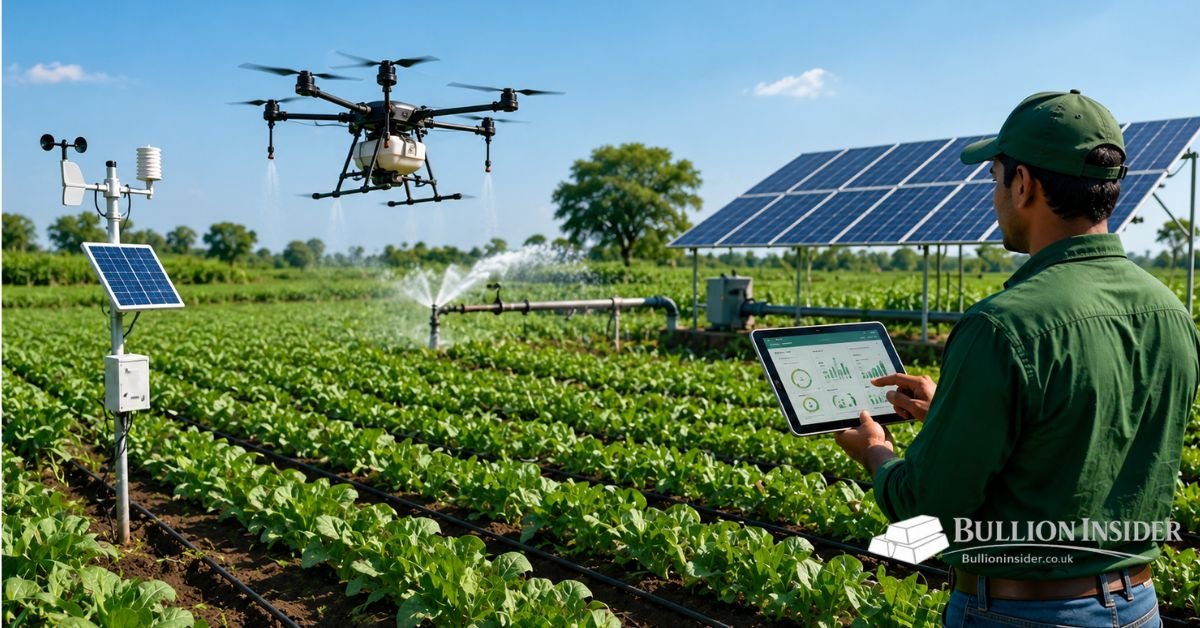
Agriculture has always been the backbone of human civilization, but modern farming faces challenges that previous generations never imagined. Climate change, water shortages, soil degradation, rising production costs, and increasing food demand have pushed farmers to rethink traditional methods. This is where green technology is transforming the future of agriculture. If you’ve ever wondered what are the best green technologies for farming?, the answer lies in a combination of smart innovations that increase productivity while protecting natural resources.
Green technologies are helping farms become more efficient, environmentally responsible, and financially sustainable. Instead of relying heavily on excessive chemical inputs and outdated practices, today’s farmers can use advanced tools such as precision agriculture, smart irrigation, renewable energy, artificial intelligence, and automated machinery. These innovations not only improve crop production but also reduce waste, lower emissions, and conserve valuable resources.
As governments, agricultural organizations, and consumers increasingly support sustainable farming, adopting environmentally friendly technologies has become more than a trend. It is now an essential strategy for ensuring food security and protecting the planet for future generations. Understanding what are the best green technologies for farming? can help farmers, students, and agriculture enthusiasts discover practical solutions that improve both productivity and sustainability.
Why Green Technology Matters in Modern Agriculture
Agriculture depends heavily on natural resources such as water, fertile soil, sunlight, and biodiversity. Unfortunately, traditional farming practices often place significant pressure on these resources. Excessive fertilizer use, inefficient irrigation, and high fuel consumption contribute to environmental problems while increasing operating costs.
Green technology focuses on reducing these negative impacts by making farming smarter rather than harder. Sustainable farming practices help conserve water, reduce greenhouse gas emissions, improve soil health, and produce healthier crops without sacrificing productivity.
The benefits extend beyond the environment. Farmers often experience lower production costs, improved crop quality, better resource management, and increased long-term profitability. Consumers also benefit from safer food production and more sustainable agricultural systems.
What Is Green Technology in Farming?
Green technology refers to environmentally friendly innovations designed to reduce agriculture’s impact on the environment while increasing efficiency. These technologies combine scientific research, engineering, digital tools, and renewable energy to create farming systems that use fewer natural resources while producing higher-quality crops.
Instead of depending entirely on manual labor or traditional methods, farmers can now monitor crops in real time, automate irrigation, predict disease outbreaks, and manage fields with incredible precision.
When people ask what are the best green technologies for farming?, they are generally referring to solutions that improve productivity while conserving water, protecting ecosystems, reducing pollution, and supporting climate resilience.
Precision Agriculture: Farming with Accurate Data
One of the most significant advancements in modern agriculture is precision farming. Rather than treating an entire field the same way, precision agriculture allows farmers to manage different areas according to their specific needs.
Using GPS technology, satellite imagery, field sensors, drones, and mapping software, farmers can identify areas requiring additional nutrients, irrigation, or pest management. This targeted approach reduces unnecessary fertilizer application and minimizes waste.
Precision agriculture provides several advantages:
- Higher crop yields
- Reduced fertilizer use
- Lower fuel consumption
- Better soil management
- Improved pest detection
- More efficient harvesting
The ability to collect accurate field data allows farmers to make informed decisions instead of relying solely on experience or guesswork.
Smart Irrigation Systems Save Every Drop of Water
Water scarcity is becoming one of agriculture’s biggest concerns worldwide. Traditional irrigation methods often waste significant amounts of water through evaporation, runoff, and overwatering.
Smart irrigation systems solve this problem by using moisture sensors, weather forecasts, automated controllers, and digital monitoring tools to deliver water only when crops truly need it.
Popular smart irrigation technologies include:
- Drip irrigation
- Soil moisture sensors
- Automated irrigation controllers
- Weather-based irrigation scheduling
- Remote irrigation monitoring
These systems can reduce water consumption dramatically while improving crop growth and reducing irrigation costs.
For regions facing drought or unpredictable rainfall, smart irrigation has become one of the most valuable sustainable farming investments available today.
Solar Energy Is Powering the Future of Agriculture
Renewable energy has become increasingly affordable for farms of every size. Solar-powered systems allow farmers to reduce dependence on fossil fuels while lowering long-term electricity expenses.
Solar panels now provide energy for:
- Water pumps
- Greenhouses
- Livestock facilities
- Farm lighting
- Electric fencing
- Cold storage
- Battery charging systems
Unlike traditional fuel-powered equipment, solar systems require relatively little maintenance after installation. Their long operating life also makes them an attractive investment for many farming operations.
As renewable energy technologies continue improving, solar-powered agriculture is becoming a key part of sustainable farming worldwide.
Agricultural Drones Make Crop Monitoring Easier
Drones have rapidly become valuable tools in modern agriculture. Equipped with advanced cameras and sensors, they can survey large fields in a fraction of the time required by traditional inspections.
Farmers use drones for:
- Crop health monitoring
- Pest detection
- Disease identification
- Fertilizer spraying
- Pesticide application
- Field mapping
- Plant population analysis
High-resolution aerial images help farmers detect problems early before they spread throughout the field. Early intervention often reduces crop losses while lowering chemical usage.
The increasing affordability of drone technology has made it accessible to both commercial farms and smaller agricultural businesses.
Artificial Intelligence Is Transforming Farm Management
Artificial intelligence has moved beyond research laboratories and into everyday farming operations. AI-powered software analyzes massive amounts of agricultural data to provide recommendations that improve decision-making.
Artificial intelligence helps farmers predict:
- Weather conditions
- Crop diseases
- Pest outbreaks
- Harvest timing
- Yield estimates
- Irrigation schedules
Machine learning systems continue improving as they process more information each growing season. This allows farmers to identify patterns that would be nearly impossible to recognize manually.
As agriculture becomes increasingly data-driven, AI serves as a valuable assistant rather than replacing farmers’ expertise.
Internet of Things (IoT) Connects the Entire Farm
The Internet of Things refers to networks of connected devices that continuously collect and transmit information.
On modern farms, IoT devices include:
- Soil moisture sensors
- Weather stations
- Livestock tracking collars
- Water quality monitors
- Temperature sensors
- Storage monitoring systems
Instead of manually checking every field, farmers receive real-time updates directly through smartphones or computers.
If soil moisture drops below an ideal level, the system immediately sends an alert. If greenhouse temperatures rise too high, automated climate controls can respond instantly.
This level of connectivity improves efficiency while reducing labor requirements and operational costs.
Vertical Farming Creates More Food Using Less Land
Urban populations continue growing, making farmland increasingly valuable. Vertical farming addresses this challenge by growing crops indoors using stacked growing systems.
Unlike conventional farming, vertical farms carefully control lighting, humidity, temperature, nutrients, and irrigation.
Common crops include:
- Lettuce
- Spinach
- Basil
- Mint
- Strawberries
- Microgreens
Vertical farming offers several environmental advantages.
It requires significantly less land than traditional agriculture while using substantially less water. Because crops grow inside controlled environments, pesticide use is often greatly reduced.
Additionally, indoor farming allows year-round production regardless of seasonal weather conditions.
Hydroponic Farming Eliminates the Need for Soil
Hydroponics is another innovative farming method gaining worldwide popularity. Instead of growing plants in soil, hydroponic systems deliver nutrient-rich water directly to plant roots.
This approach offers several impressive benefits.
Plants typically grow faster because nutrients are immediately available. Water usage is dramatically reduced through recycling systems, and weeds become virtually nonexistent.
Hydroponic farming is especially useful in areas where fertile farmland is limited or unavailable.
Many commercial vegetable producers now use hydroponic greenhouses to grow fresh produce consistently throughout the year.
Aquaponics Combines Fish Farming and Crop Production
Aquaponics takes sustainable agriculture one step further by combining hydroponics with aquaculture.
Fish produce natural waste that contains valuable nutrients. Instead of disposing of this waste, beneficial bacteria convert it into nutrients that feed nearby plants.
The plants then naturally filter the water before it returns to the fish tanks.
This creates a balanced ecosystem where two food sources are produced using a single water system.
Aquaponics reduces water waste while minimizing the need for synthetic fertilizers, making it one of the most environmentally friendly food production systems available today.
Robotics and Automation Are Changing Daily Farm Operations
One of the biggest challenges facing agriculture today is the shortage of skilled labor. Seasonal work is becoming more expensive, and finding enough workers during planting and harvesting seasons can be difficult. Robotics and automation provide practical solutions that improve efficiency without compromising quality.
Modern agricultural robots can perform tasks such as:
- Planting seeds with precision
- Harvesting fruits and vegetables
- Removing weeds
- Monitoring crop growth
- Sorting harvested produce
- Feeding livestock
Autonomous tractors equipped with GPS navigation can also work with minimal human supervision, reducing fuel consumption and ensuring greater accuracy. These machines operate consistently, helping farmers complete work faster while minimizing errors.
Electric Farm Equipment Reduces Fuel Costs
Diesel-powered machinery has long been a necessity on farms, but electric equipment is becoming a cleaner alternative. Manufacturers now produce electric tractors, utility vehicles, and battery-powered tools that reduce emissions while lowering maintenance costs.
Advantages of electric farm equipment include:
- Reduced greenhouse gas emissions
- Lower fuel expenses
- Quieter operation
- Less maintenance
- Improved energy efficiency
When combined with renewable energy sources such as solar power, electric equipment creates a farming system that is both environmentally responsible and economically sustainable.
Biofertilizers Improve Soil Naturally
Healthy soil is the foundation of successful farming. Instead of relying solely on synthetic fertilizers, many farmers are turning to biofertilizers that contain beneficial microorganisms.
These natural organisms improve nutrient availability, encourage stronger root development, and support healthier soil ecosystems.
Common benefits include:
- Better soil fertility
- Reduced dependence on chemical fertilizers
- Improved crop growth
- Increased microbial activity
- Long-term soil sustainability
Using biofertilizers alongside organic matter also helps maintain soil structure and reduces environmental pollution caused by excessive fertilizer runoff.
Biological Pest Control Protects Crops Without Harming Nature
Chemical pesticides can effectively control pests, but overuse may damage ecosystems and beneficial insects. Green farming encourages integrated pest management that combines natural solutions with careful monitoring.
Environmentally friendly pest control methods include:
- Beneficial insects
- Biological pesticides
- Crop rotation
- Companion planting
- Pest monitoring systems
- Disease-resistant crop varieties
These methods reduce chemical dependence while maintaining healthy crop production.
Composting Turns Waste into Valuable Resources
Every farm produces organic waste, including crop residues, leaves, manure, and food scraps. Composting transforms this material into nutrient-rich organic fertilizer.
Adding compost to farmland improves:
- Soil structure
- Water retention
- Nutrient availability
- Microbial activity
- Root development
Instead of becoming landfill waste, organic materials return valuable nutrients to the soil, supporting a circular agricultural system.
Rainwater Harvesting Supports Water Conservation
Many farms experience irregular rainfall throughout the year. Rainwater harvesting systems capture and store rainfall for future irrigation.
Storage methods include:
- Underground tanks
- Farm ponds
- Reservoirs
- Collection systems connected to buildings
This stored water reduces dependence on groundwater while helping farmers continue irrigation during dry periods.
Rainwater harvesting is especially valuable in regions vulnerable to drought and water shortages.
Climate-Smart Agriculture Builds Resilient Farms
Climate change has made farming increasingly unpredictable. Rising temperatures, changing rainfall patterns, floods, and droughts require farmers to become more adaptable.
Climate-smart agriculture focuses on three primary goals:
- Increasing farm productivity
- Improving resilience to climate change
- Reducing greenhouse gas emissions
Common climate-smart practices include:
- Cover cropping
- Conservation tillage
- Efficient irrigation
- Crop diversification
- Agroforestry
- Improved soil management
Farmers adopting these practices are often better prepared for changing environmental conditions while maintaining consistent production.
Carbon Farming Supports Environmental Sustainability
Carbon farming encourages agricultural practices that increase the amount of carbon stored in soil and vegetation.
Examples include:
- Planting cover crops
- Reduced tillage
- Tree planting
- Improved grazing management
- Restoring degraded land
Healthier soils store more carbon while improving water retention, reducing erosion, and supporting biodiversity.
As carbon credit markets continue developing, some farmers may also benefit financially from adopting carbon-friendly farming methods.
Controlled Environment Agriculture Improves Crop Quality
Controlled Environment Agriculture (CEA) uses technology to create ideal growing conditions regardless of outdoor weather.
Farmers can precisely control:
- Temperature
- Humidity
- Carbon dioxide levels
- Lighting
- Air circulation
- Nutrient delivery
This controlled approach reduces crop losses while producing high-quality fruits and vegetables throughout the year.
Greenhouses and indoor farming facilities commonly use CEA systems to maximize production.
Regenerative Agriculture Restores the Land
Unlike farming methods focused only on production, regenerative agriculture aims to improve the health of entire ecosystems.
Modern technology supports regenerative farming through:
- Soil mapping
- Satellite monitoring
- Precision planting
- Digital farm records
- Data-driven decision-making
Healthy soils support stronger crops, better water retention, increased biodiversity, and greater resistance to extreme weather.
Many experts believe regenerative agriculture will play a major role in the future of sustainable food production.
Comparing Popular Green Farming Technologies
| Technology | Primary Benefit | Best For |
| Precision agriculture | Accurate resource management | Large and medium farms |
| Smart irrigation | Water conservation | Water-scarce regions |
| Solar energy | Renewable electricity | Farms of all sizes |
| Agricultural drones | Crop monitoring | Medium and large farms |
| Artificial intelligence | Better decision-making | Data-driven farming |
| IoT sensors | Real-time monitoring | Precision agriculture |
| Vertical farming | Maximum production in small spaces | Urban agriculture |
| Hydroponics | Water-efficient crop production | Indoor farming |
| Aquaponics | Sustainable food systems | Small commercial farms |
| Robotics | Labor efficiency | Large-scale operations |
How to Choose the Right Green Technology for Your Farm
Every farm has different needs, so the best technology depends on several factors.
Consider the following before investing:
- Farm size
- Available budget
- Local climate
- Water availability
- Type of crops
- Labor availability
- Energy costs
- Long-term business goals
Small farms may benefit most from smart irrigation, composting, rainwater harvesting, and solar-powered equipment. Larger commercial farms often gain additional advantages from drones, AI systems, robotics, and precision agriculture.
If you are still asking what are the best green technologies for farming?, remember that the answer is rarely a single technology. The most successful farms combine several sustainable solutions that work together.
Benefits of Green Farming Technologies
Adopting environmentally friendly technologies offers advantages that extend beyond the farm itself.
Major benefits include:
- Higher crop yields
- Better soil health
- Reduced water consumption
- Lower production costs
- Improved food quality
- Reduced pollution
- Lower greenhouse gas emissions
- Increased biodiversity
- Better resource management
- Greater long-term profitability
These benefits help create farming systems capable of feeding growing populations while protecting natural ecosystems.
Challenges Farmers Should Consider
Although green technologies provide many advantages, successful implementation requires planning.
Common challenges include:
- High initial investment
- Technical training requirements
- Equipment maintenance
- Internet connectivity in rural areas
- Limited financial resources for small farms
- Learning new management systems
Despite these obstacles, many technologies eventually reduce operating costs enough to offset their initial investment over time.
The Future of Sustainable Farming
Agriculture continues evolving rapidly. Emerging technologies promise even greater improvements in efficiency and sustainability.
Future developments are expected to include:
- Smarter artificial intelligence
- Fully autonomous farm equipment
- Advanced robotics
- Improved satellite monitoring
- Digital twins for farms
- More affordable renewable energy
- Enhanced precision agriculture
- Better climate forecasting
- Improved biological crop protection
- Expanded carbon farming opportunities
As technology becomes more affordable, even small family farms will have greater access to innovations that were once available only to large agricultural businesses.
Understanding what are the best green technologies for farming? is becoming increasingly important because these innovations will shape how food is produced in the coming decades. Farmers who embrace sustainable technologies today are likely to be better prepared for tomorrow’s environmental and economic challenges.
Conclusion
Modern agriculture is entering a new era where sustainability and productivity go hand in hand. Green technologies are no longer optional innovations reserved for large commercial farms. They are practical tools that help farmers conserve water, improve soil health, reduce emissions, lower operating costs, and produce healthier crops. From precision agriculture and smart irrigation to solar energy, artificial intelligence, robotics, and regenerative farming, every technology contributes to building a more resilient agricultural system.
For anyone wondering what are the best green technologies for farming?, the answer depends on the unique needs of each farm. The most successful approach is to combine multiple sustainable solutions that improve efficiency while protecting natural resources. As these technologies continue to advance and become more accessible, they will play a vital role in ensuring global food security and creating a healthier future for both farmers and the environment.
The future of agriculture will depend not only on environmentally friendly equipment but also on software that connects people, devices, and information more efficiently. Learn more about integrated digital solutions in App and Socials AlienSync: Features, Benefits, and How It Simplifies Digital Workflows.
FAQs
What are green technologies in farming?
Green technologies are environmentally friendly farming methods and innovations that improve productivity while conserving water, soil, energy, and other natural resources.
Which green technology saves the most water?
Smart irrigation systems, drip irrigation, and hydroponic farming are among the most effective technologies for reducing water consumption.
Can small farmers use green farming technologies?
Yes. Small farms can successfully adopt affordable solutions such as composting, rainwater harvesting, solar-powered pumps, and smart irrigation systems.
Why is precision agriculture important?
Precision agriculture helps farmers use fertilizers, water, and pesticides more efficiently, reducing waste while increasing crop yields and profitability.
What is the future of green farming?
The future includes greater use of artificial intelligence, robotics, renewable energy, precision farming, and climate-smart agricultural practices to produce food more sustainably.