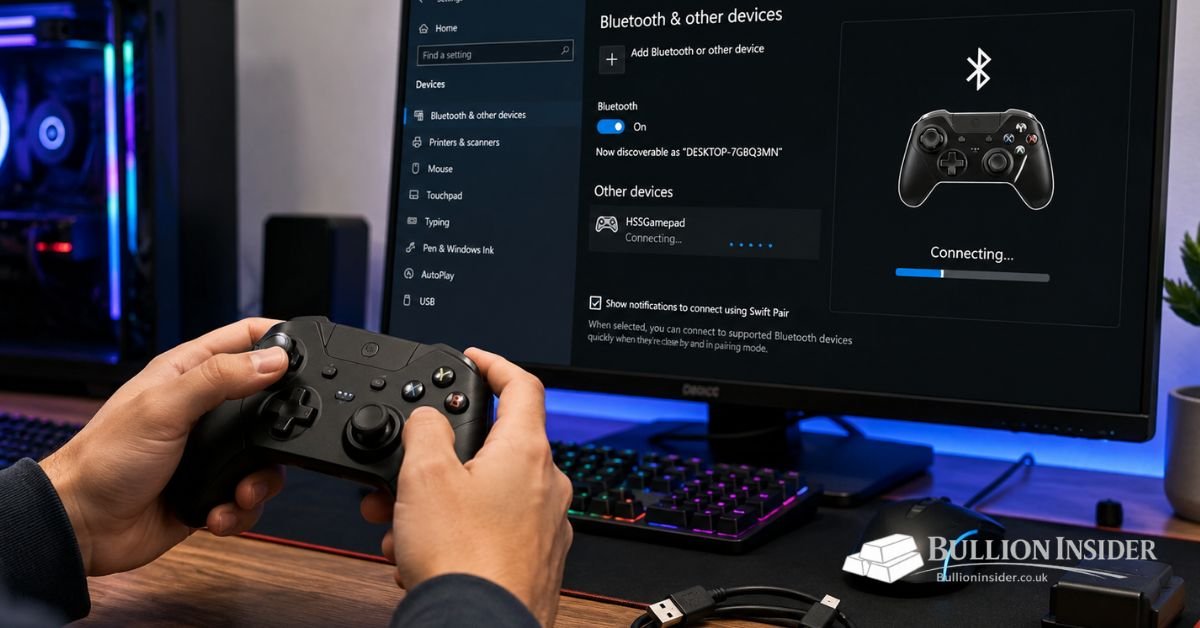
Nothing interrupts a great gaming session faster than a controller that refuses to connect. Whether your HSSGamepad is not pairing with Bluetooth, disconnecting randomly, or failing to respond through a USB cable, these problems can quickly become frustrating. The good news is that most connection issues can be solved without replacing your controller or spending money on repairs.
If you are experiencing connectivity issues hssgamepad, this guide will walk you through the most common causes and practical solutions. From simple fixes like restarting your devices to advanced troubleshooting methods such as updating drivers and firmware, you’ll learn how to restore a stable connection and get back to gaming with confidence.
This article is designed for beginners and experienced gamers alike, providing clear explanations and step-by-step instructions that are easy to follow.
Understanding Connectivity Issues HSSGamepad
The phrase connectivity issues hssgamepad describes any problem that prevents the controller from connecting properly to a compatible device. These issues may occur when using Bluetooth, a USB cable, or a wireless receiver.
Some users cannot find the controller during Bluetooth pairing, while others experience sudden disconnections during gameplay. In some situations, the controller connects successfully but the buttons fail to respond correctly. These problems can occur on Windows PCs, laptops, Android phones, tablets, Smart TVs, and other compatible devices.
Although connection problems may seem serious, they are often caused by outdated software, incorrect settings, low battery power, or wireless interference rather than a hardware failure.
Common Symptoms of Connection Problems
Recognizing the symptoms helps you identify the right solution more quickly.
Some of the most common signs include:
- Bluetooth pairing repeatedly fails.
- The controller is not detected by the computer.
- The controller disconnects during gameplay.
- Noticeable input lag while playing games.
- USB connection is not recognized.
- Buttons stop responding after connecting.
- The controller charges but does not connect.
- Bluetooth keeps reconnecting automatically.
- Windows displays an unknown USB device message.
- Wireless range becomes unusually short.
If you notice one or more of these symptoms, there is a good chance the problem can be fixed by following the troubleshooting methods below.
Why Connectivity Issues HSSGamepad Occur
There are several reasons why a controller may fail to connect properly. Understanding these causes makes troubleshooting much easier.
Low Battery Level
A low battery is one of the most overlooked reasons for connection problems. Even if the controller turns on, insufficient battery power can weaken the Bluetooth signal, leading to unstable performance or frequent disconnections.
Before trying any advanced troubleshooting, fully charge the controller for at least one hour.
Bluetooth Pairing Conflicts
Many controllers remember previously connected devices. If your HSSGamepad is still paired with another phone, computer, or television, it may refuse to connect to your current device until the old pairing information is removed.
Deleting previous Bluetooth connections often solves this issue within minutes.
Outdated Bluetooth Drivers
Computers depend on Bluetooth drivers to communicate with wireless devices. When these drivers become outdated or corrupted, the operating system may fail to recognize the controller correctly.
Keeping drivers updated improves compatibility and connection stability.
Old Controller Firmware
Manufacturers occasionally release firmware updates that improve performance and fix software bugs. If your controller uses outdated firmware, it may experience pairing problems, delayed button responses, or random disconnects.
Installing the latest firmware helps maintain reliable performance.
Wireless Signal Interference
Bluetooth devices share radio frequencies with Wi-Fi routers, wireless headphones, keyboards, and other electronics. When too many devices operate in the same area, signal interference may interrupt communication between the controller and your device.
Moving closer to your gaming device and reducing nearby wireless activity often improves stability.
Faulty USB Cable
Not every USB cable supports data transfer. Some cables only provide charging functionality. If the cable cannot transfer data, your computer will not detect the controller even though it appears to be charging.
Testing another high-quality USB data cable is always recommended.
Easy Fixes for Connectivity Issues HSSGamepad
If you are facing connectivity issues hssgamepad, start with these simple solutions before attempting advanced repairs.
Restart the Controller and Your Device
Temporary software glitches can interfere with Bluetooth communication.
Turn off the controller completely, restart your computer, phone, or Smart TV, then turn the controller back on. Attempt to reconnect after both devices have restarted.
This simple method often resolves temporary software conflicts.
Fully Recharge the Controller
A weak battery can cause unstable wireless performance.
Connect the controller to a charger using a reliable USB cable and allow it to charge completely before testing the connection again.
Even if the battery indicator shows some charge remaining, a full recharge may restore stable performance.
Remove Old Bluetooth Pairings
Old Bluetooth records can confuse the operating system.
To perform a clean connection:
- Open Bluetooth settings.
- Locate the HSSGamepad controller.
- Remove or forget the device.
- Restart Bluetooth.
- Pair the controller again.
This process creates a fresh connection without old pairing information interfering.
Move Closer to the Device
Bluetooth has a limited operating range.
If you are sitting too far away, the signal may weaken and cause lag or sudden disconnects. Keep the controller within a reasonable distance of the connected device for the best performance.
Turn Off Nearby Wireless Devices
Wireless interference can significantly affect controller performance.
If possible, temporarily disconnect unused Bluetooth devices such as speakers, headphones, keyboards, and smart accessories while pairing your controller.
Reducing signal congestion often produces a stronger and more reliable connection.
Fixing Bluetooth Pairing Problems
Bluetooth pairing problems are among the most common forms of connectivity issues hssgamepad.
If your controller refuses to appear in the Bluetooth device list, try the following steps:
- Ensure Bluetooth is enabled.
- Put the controller into pairing mode.
- Restart Bluetooth services.
- Remove previous pairing records.
- Restart both devices.
- Attempt pairing again.
Many users successfully reconnect their controller after following these simple steps.
How to Fix USB Connection Problems
If Bluetooth is unavailable, using a USB cable provides an excellent alternative. However, USB connections can also experience detection problems.
Use a Different USB Port
Some USB ports may not supply stable power or data communication.
Connect the controller directly to another USB port instead of using a USB hub or extension cable.
Replace the USB Cable
A damaged or charging-only cable is a common cause of connection failures.
Use a certified USB data cable that supports both charging and data transfer.
Restart the Computer
Windows occasionally fails to initialize USB devices correctly.
After reconnecting the controller, restart the computer and test the connection again.
Update USB Drivers
Outdated USB controller drivers can prevent proper device detection.
Updating these drivers through Device Manager often restores communication between Windows and the controller.
Updating Drivers on Windows
Windows users should regularly update both Bluetooth and USB drivers.
To update drivers:
- Open Device Manager.
- Expand the Bluetooth section.
- Right-click your Bluetooth adapter.
- Select Update Driver.
- Repeat the process for USB controllers.
- Restart your computer.
Installing updated drivers improves compatibility and reduces unexpected connection problems.
Install the Latest Firmware
Firmware updates improve communication between the controller and supported devices.
Benefits of updating firmware include:
- Better Bluetooth stability.
- Faster response times.
- Improved compatibility.
- Reduced connection failures.
- Bug fixes for known software issues.
If firmware updates are available for your controller model, installing them is one of the most effective ways to improve long-term performance.
Reduce Input Lag While Gaming
Slow button responses make games less enjoyable, especially competitive titles.
To reduce input lag:
- Close unnecessary background applications.
- Update controller firmware.
- Update Bluetooth drivers.
- Move closer to the connected device.
- Disconnect unused Bluetooth accessories.
- Switch to a wired USB connection when possible.
These adjustments help deliver faster and more consistent controller response during gameplay.
Windows-Specific Solutions for Connection Problems
Windows computers support most Bluetooth and USB controllers, but incorrect settings can sometimes prevent a successful connection. If your controller still isn’t working after trying the basic fixes, these Windows-specific solutions may help.
Check Device Manager
Device Manager shows whether Windows has detected your controller correctly.
Follow these steps:
- Press Windows + X and open Device Manager.
- Expand the Bluetooth and Human Interface Devices (HID) sections.
- Look for any device showing a warning icon.
- Right-click the device and select Update Driver or Uninstall Device.
- Restart your computer and reconnect the controller.
Windows will usually reinstall the required drivers automatically after a restart.
Disable USB Power Saving
Windows may turn off USB ports to save power, which can interrupt controller connections.
To disable this feature:
- Open Device Manager.
- Expand Universal Serial Bus Controllers.
- Open the properties of each USB Root Hub.
- Select the Power Management tab.
- Uncheck the option allowing Windows to turn off the device to save power.
Restart your computer after making these changes.
Install Windows Updates
Keeping Windows updated improves hardware compatibility and fixes known bugs affecting Bluetooth and USB devices.
Go to Settings > Windows Update, install any available updates, and restart your PC before testing the controller again.
Troubleshooting on Android Devices
Many gamers use HSSGamepad with Android smartphones and tablets. If the controller fails to connect, these steps can usually solve the problem.
Forget the Existing Bluetooth Connection
Old pairing records may prevent a fresh connection.
- Open Bluetooth settings.
- Tap the saved HSSGamepad device.
- Select Forget or Remove.
- Restart Bluetooth.
- Pair the controller again.
Restart the Phone
A simple restart refreshes Bluetooth services and clears temporary software errors that may interfere with wireless devices.
Keep Software Updated
Installing the latest Android updates improves Bluetooth stability and compatibility with external gaming accessories.
Avoid Battery Saver Mode
Some battery optimization settings restrict Bluetooth performance. Disabling battery saver while gaming may improve controller reliability.
Troublesbleshooting on Smart TVs
Many Smart TVs support Bluetooth controllers for cloud gaming, emulators, and streaming apps.
If the controller doesn’t connect:
- Restart the television.
- Update the TV software.
- Remove previously paired controllers.
- Enable Bluetooth pairing mode on the controller.
- Keep the controller close to the TV during setup.
If your TV supports only certain controller profiles, check its compatibility before pairing.
How to Perform a Factory Reset
If none of the previous solutions work, resetting the controller may resolve hidden software conflicts.
A factory reset clears stored Bluetooth pairings and restores default settings.
After resetting:
- Fully charge the controller.
- Restart your device.
- Pair the controller again.
- Test both Bluetooth and USB connections.
Many persistent software-related issues disappear after a complete reset.
Advanced Troubleshooting Methods
If you still experience connectivity issues hssgamepad, consider these advanced troubleshooting techniques.
Test the Controller on Another Device
Connect the controller to another computer, phone, or tablet.
If it works correctly elsewhere, the problem is likely related to your original device rather than the controller itself.
Test Another Bluetooth Device
Pair another Bluetooth accessory with your computer.
If multiple devices fail to connect, the issue may be with the Bluetooth adapter instead of the controller.
Reinstall Bluetooth Drivers
Sometimes updating drivers is not enough.
Completely uninstall the Bluetooth adapter through Device Manager, restart the computer, and allow Windows to install a fresh copy automatically.
Check for Software Conflicts
Third-party controller software, gaming utilities, or outdated Bluetooth management applications may interfere with normal operation.
Temporarily disabling these programs helps identify software conflicts.
Prevent Future Connection Problems
Regular maintenance keeps your controller working smoothly and reduces the chances of future connection failures.
Good habits include:
- Charge the controller before long gaming sessions.
- Install firmware updates whenever available.
- Keep Windows or Android updated.
- Use high-quality USB data cables.
- Remove unused Bluetooth pairings.
- Store the controller in a clean, dry place.
- Avoid dropping or exposing the controller to moisture.
- Disconnect the controller properly after use.
Following these simple practices can significantly extend the controller’s lifespan while improving connection reliability.
Device Compatibility
Most HSSGamepad models are designed to work with several platforms.
| Device | Bluetooth | USB |
|---|---|---|
| Windows PC | Yes | Yes |
| Windows Laptop | Yes | Yes |
| Android Phone | Yes | Limited by model |
| Android Tablet | Yes | Limited by model |
| Smart TV | Yes | No |
| Gaming Laptop | Yes | Yes |
Compatibility may vary depending on the specific controller model and software version.
When Should You Replace the Controller?
Software fixes solve most problems, but hardware failures sometimes require replacement.
Consider replacing the controller if:
- It no longer powers on.
- The charging port is physically damaged.
- Bluetooth hardware has failed completely.
- Buttons remain unresponsive after resetting.
- Internal battery no longer holds a charge.
- The controller has suffered significant physical damage.
Before purchasing a new controller, always test the existing one on another compatible device to confirm the issue.
Tips for Better Gaming Performance
Besides maintaining a stable connection, these habits can improve your gaming experience.
- Keep your controller fully charged.
- Stay within Bluetooth range.
- Close unnecessary background applications.
- Keep firmware and drivers updated.
- Use a wired connection for competitive games.
- Clean the controller regularly to prevent dust buildup around buttons and ports.
These small improvements can make gameplay smoother and more responsive.
Conclusion
Experiencing connectivity issues hssgamepad can be frustrating, but most connection problems have simple solutions. Whether the issue is caused by outdated drivers, Bluetooth pairing conflicts, low battery, wireless interference, or a faulty USB cable, following the troubleshooting steps in this guide can restore a reliable connection in most cases.
Regular maintenance, software updates, and proper controller care will help prevent future problems while improving overall gaming performance. By taking a systematic approach and testing one solution at a time, you can identify the root cause and enjoy uninterrupted gaming across your favorite devices.
Keeping your operating system and installed software updated is one of the easiest ways to prevent future compatibility issues. You can also explore Software Advice WBSoftwarement: A Complete Guide to Smarter Software Decisions for practical software management tips.
FAQs
Why is my HSSGamepad not connecting to Bluetooth?
This usually happens because of low battery, old pairing records, outdated drivers, or Bluetooth interference. Removing old pairings and reconnecting often fixes the issue.
How can I fix connectivity issues hssgamepad quickly?
Start by charging the controller, restarting both devices, removing previous Bluetooth connections, updating drivers, and trying the pairing process again.
Can I use HSSGamepad with Windows 11?
Yes. Most HSSGamepad models work with Windows 11 through Bluetooth or USB after the necessary drivers are installed.
Why does my controller keep disconnecting during games?
Frequent disconnections are commonly caused by weak battery power, wireless interference, outdated firmware, or unstable Bluetooth connections.
Is a factory reset safe for HSSGamepad?
Yes. A factory reset restores the controller to its default settings, removes old pairing information, and can solve many persistent software-related connection problems.