Silver has long been one of the world’s most important precious metals, valued for both investment and industrial use. While many investors follow international benchmarks like COMEX and the London Bullion Market, China’s silver market has become increasingly influential. As a result, thousands of investors, traders, manufacturers, and market analysts search for the Shanghai silver price today to understand current market conditions and global price movements.
China is one of the world’s largest consumers of silver, driven by strong demand from industries such as solar energy, electronics, electric vehicles, medical technology, and jewelry manufacturing. Because of this enormous demand, the Shanghai market often reflects unique supply-and-demand conditions that differ from Western exchanges.
Whether you’re an investor, a business owner, or simply interested in precious metals, understanding how the Shanghai silver market works can help you make more informed decisions. This guide explains today’s Shanghai silver price, how it is determined, what influences it, and why it matters to global markets.
What Is the Shanghai Silver Price?
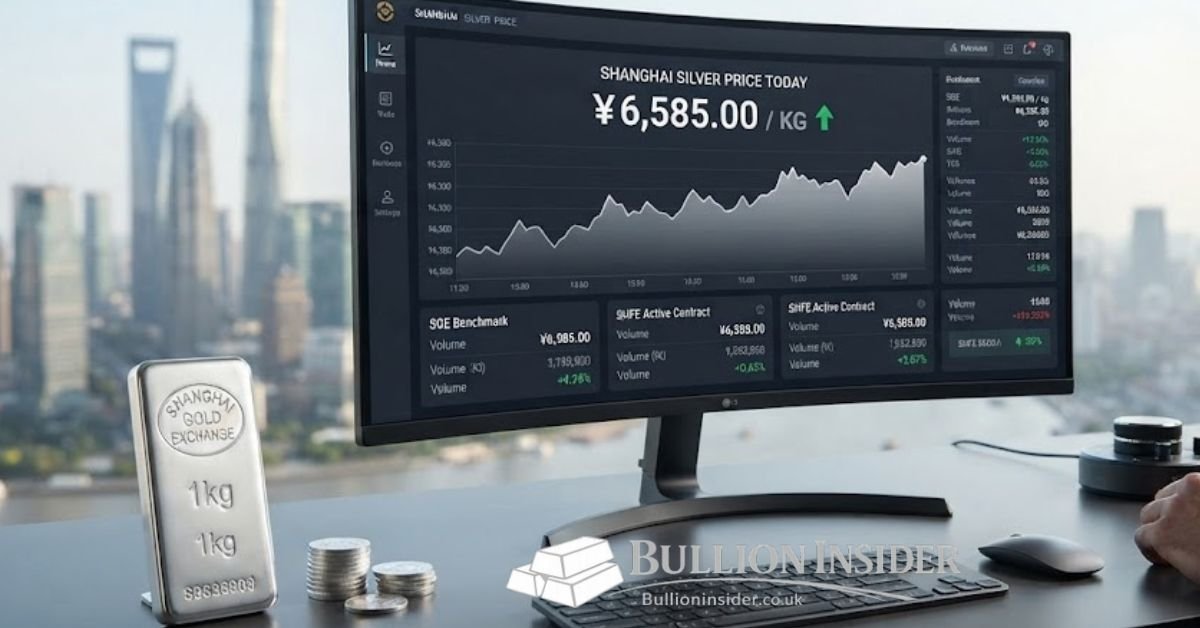
The Shanghai silver price refers to the price of silver traded on China’s major precious metals exchanges, primarily the Shanghai Gold Exchange (SGE) and the Shanghai Futures Exchange (SHFE).
Unlike many international silver prices quoted in U.S. dollars per troy ounce, Shanghai prices are generally quoted in Chinese yuan (RMB) and may be expressed per kilogram or per gram, depending on the market and contract.
There are two primary markets where silver pricing is established:
Shanghai Gold Exchange (SGE)
The Shanghai Gold Exchange focuses mainly on physical precious metals trading. It publishes the official Shanghai Silver Benchmark Price, which reflects actual physical transactions within China’s domestic market.
Shanghai Futures Exchange (SHFE)
The Shanghai Futures Exchange offers standardized silver futures contracts that allow investors and companies to hedge against future price fluctuations or speculate on market movements.
Together, these exchanges provide valuable information about China’s precious metals market and are closely watched by investors worldwide.
Why Investors Search for the Shanghai Silver Price Today
There are several reasons why the daily Shanghai silver price attracts global attention.
Tracking Physical Demand
Unlike some international markets where futures trading dominates, the Shanghai market has a strong connection to physical silver demand. Rising prices can indicate increasing industrial consumption or stronger investment buying within China.
Monitoring Market Premiums
Sometimes silver in Shanghai trades at a premium compared to international markets. These premiums may suggest tight local supply or exceptionally strong domestic demand.
Comparing Global Markets
Professional traders frequently compare Shanghai prices with:
- COMEX Silver Futures
- London Bullion Market prices
- International spot silver prices
Differences between these markets often provide valuable insights into global supply chains and investor sentiment.
How Is the Shanghai Silver Price Determined?
The price of silver in Shanghai is not randomly assigned. Instead, it is based on transparent market activity.
Physical Market Trading
On the Shanghai Gold Exchange, buyers and sellers submit orders throughout the trading session. The exchange matches these orders to determine fair market prices based on actual transactions.
This benchmark reflects genuine supply and demand rather than estimates.
Futures Market Activity
On the Shanghai Futures Exchange, prices change continuously throughout trading hours as participants buy and sell silver futures contracts.
Several factors influence these prices, including:
- Industrial demand
- Investment demand
- Currency movements
- Inflation expectations
- Global economic news
- Precious metals market trends
Shanghai Silver Price vs International Silver Prices
One of the most common questions investors ask is why Shanghai prices sometimes differ from global silver prices.
Several important factors explain these differences.
Currency Differences
International silver is usually quoted in U.S. dollars.
Shanghai silver is priced in Chinese yuan (RMB).
Exchange rate fluctuations naturally create price differences even when silver values remain stable.
Domestic Supply and Demand
China’s massive manufacturing industry consumes enormous quantities of silver.
Demand comes from sectors including:
- Solar panel manufacturing
- Electric vehicles
- Consumer electronics
- Medical equipment
- Telecommunications
- High-tech manufacturing
When industrial demand increases rapidly, Shanghai prices may rise faster than international markets.
Physical Delivery
The Shanghai Gold Exchange emphasizes physical metal trading.
This focus on actual silver delivery often makes Shanghai prices a more direct reflection of physical supply conditions.
Government Policies
China’s import regulations, taxation, and financial policies can influence domestic precious metals prices independently of overseas markets.
Key Factors Affecting Shanghai Silver Prices
Many different economic and market forces influence today’s Shanghai silver price.
Industrial Demand
Industrial demand remains one of the strongest drivers.
Silver is an essential material in:
Solar Energy
Modern photovoltaic panels require significant amounts of silver for electrical conductivity.
As renewable energy projects expand, silver demand often increases.
Electronics
Nearly every smartphone, computer, and electronic device contains small quantities of silver because of its exceptional conductivity.
Electric Vehicles
Electric vehicles require more electronic components than traditional vehicles, increasing silver consumption across the automotive sector.
Medical Technology
Silver possesses natural antimicrobial properties, making it valuable in medical equipment and healthcare products.
Investment Demand
During periods of economic uncertainty, many investors purchase silver as a store of value.
Higher investment demand often pushes prices upward.
Popular investment products include:
- Silver bullion
- Silver coins
- Exchange-traded funds (ETFs)
- Silver futures
- Precious metals portfolios
Global Economic Conditions
Silver prices frequently respond to major economic developments.
Examples include:
- Inflation
- Central bank policies
- Interest rate changes
- Global recessions
- Banking uncertainty
- Geopolitical tensions
When uncertainty rises, investors often increase their exposure to precious metals.
Exchange Inventories
Available silver inventories held by exchanges can influence prices.
Declining warehouse stocks may indicate tightening physical supply, while increasing inventories can suggest more balanced market conditions.
Investors often monitor inventory reports alongside daily price movements.
US Dollar and Chinese Yuan
Because silver trades internationally, currency movements affect pricing.
A stronger U.S. dollar may pressure international silver prices, while changes in the value of the Chinese yuan can influence domestic Shanghai prices.
Why Shanghai Silver Sometimes Trades at a Premium
Market observers occasionally notice that Shanghai silver trades above international benchmark prices.
Several factors may contribute to this premium.
Strong Manufacturing Activity
China’s industrial sector is one of the largest silver consumers in the world.
Growing factory output often increases demand for physical silver.
Increased Investment Buying
When Chinese investors seek safe-haven assets, local demand for silver may increase more rapidly than supply.
Limited Physical Supply
Temporary supply shortages, transportation challenges, or declining exchange inventories may contribute to higher domestic prices.
Import Costs
Shipping expenses, import regulations, and taxes may also affect domestic pricing.
Who Uses Shanghai Silver Prices?
The Shanghai silver benchmark serves many different industries.
Investors
Investors monitor prices to identify buying or selling opportunities.
Commodity Traders
Professional traders compare Shanghai prices with other global exchanges to identify arbitrage opportunities.
Manufacturers**
Companies that rely on silver use daily prices when planning production costs.
Industries include:
- Solar energy
- Electronics
- Jewelry
- Automotive manufacturing
- Telecommunications
- Medical equipment
Banks and Financial Institutions
Banks monitor precious metals markets for investment products, commodity financing, and economic analysis.
How to Check the Shanghai Silver Price Today
Reliable pricing information is available from several trusted sources.
These include:
- Shanghai Gold Exchange (SGE)
- Shanghai Futures Exchange (SHFE)
- Reuters
- Bloomberg
- Kitco
- Investing.com
- Trading Economics
- Financial market platforms
When reviewing prices, pay attention to:
- Trading date
- Currency (RMB or USD)
- Spot or futures market
- Contract month
- Benchmark or settlement price
Checking these details ensures you’re comparing the correct market data rather than different contract types or currencies.
History of the Shanghai Silver Market
China has traded precious metals for centuries, but its modern exchange-based market is relatively recent.
The Shanghai Gold Exchange (SGE) was established in 2002 under the supervision of the People’s Bank of China. Its goal was to create a transparent marketplace for trading physical precious metals, including gold and silver.
Over time, the SGE introduced the Shanghai Silver Benchmark Price, giving the domestic market a reliable reference based on actual transactions rather than estimates.
The Shanghai Futures Exchange (SHFE) also became an important center for silver trading. Its standardized futures contracts allow businesses to hedge against price fluctuations and investors to participate in the market without buying physical silver.
Today, both exchanges play a significant role in global precious metals trading, especially as China’s industrial demand continues to grow.
Benefits of Following the Shanghai Silver Price
Keeping track of the Shanghai silver price isn’t only useful for professional traders. It also offers valuable insights for investors, businesses, and anyone interested in the precious metals market.
Better Investment Decisions
Daily price updates help investors identify trends, compare international markets, and decide when to buy or sell silver.
Understanding Industrial Demand
Since China is one of the world’s largest consumers of silver, movements in Shanghai often reflect changes in manufacturing activity.
Monitoring Global Supply
Premiums or discounts in Shanghai can indicate whether physical silver is becoming more or less available.
Market Transparency
Official benchmark prices published by recognized exchanges provide reliable data for businesses and financial institutions.
Potential Risks and Drawbacks
Although Shanghai silver prices provide valuable information, there are several limitations to keep in mind.
Currency Differences
Shanghai prices are quoted in Chinese yuan (RMB), while many international markets use U.S. dollars. Exchange rate fluctuations can affect comparisons.
Market Regulations
China’s domestic market operates under its own regulatory framework, which may differ from Western commodity exchanges.
Futures Volatility
Silver futures can experience rapid price changes, especially during periods of economic uncertainty or major news events.
Regional Factors
Domestic policies, import rules, and local demand can influence Shanghai prices independently of international markets.
Practical Example: Why the Shanghai Price Matters
Imagine that a solar panel manufacturer in China expects demand for renewable energy products to increase during the next year.
To secure raw materials, the company purchases silver through long-term contracts or futures markets. If many manufacturers take similar action, demand for physical silver rises, which may push Shanghai prices higher.
At the same time, investors around the world may notice the increase and compare Shanghai prices with COMEX or London prices. If Shanghai is trading at a premium, it could signal stronger physical demand within China.
This example shows how industrial activity can influence silver prices and why global investors pay close attention to the Shanghai market.
Tips for Following Shanghai Silver Prices
If you regularly monitor silver markets, these tips can help you better understand price movements.
Compare Multiple Markets
Don’t rely on a single price. Compare:
- Shanghai Gold Exchange (SGE)
- Shanghai Futures Exchange (SHFE)
- COMEX Silver
- International spot silver prices
Comparing markets provides a broader picture of global supply and demand.
Watch Currency Movements
Because Shanghai prices are quoted in RMB, changes in exchange rates can affect comparisons with U.S. dollar-denominated markets.
Follow Industrial News
News related to solar energy, electronics, electric vehicles, and manufacturing often influences silver demand.
Monitor Central Bank Policies
Interest rates, inflation, and economic policy decisions can impact investor demand for precious metals.
Use Official Sources
Whenever possible, verify prices through official exchanges or reputable financial data providers instead of relying on social media posts or unverified websites.
Common Misconceptions About Shanghai Silver Prices
“Shanghai silver is always more expensive.”
Not necessarily. Although Shanghai has occasionally traded at a premium, prices vary depending on supply, demand, exchange rates, and market conditions.
“Shanghai prices and COMEX prices should always match.”
These are separate markets operating under different conditions. Price differences are normal and often reflect regional demand and currency fluctuations.
“Only professional traders need to follow Shanghai silver.”
Many investors, analysts, manufacturers, and businesses monitor Shanghai prices because they offer valuable insights into global silver demand.
“Silver prices only depend on investment demand.”
Investment demand is important, but industrial consumption also plays a major role. Electronics, renewable energy, healthcare, and manufacturing all contribute significantly to silver usage.
Future Outlook
The long-term outlook for silver remains closely linked to industrial growth and technological innovation.
Several trends could continue supporting demand over the coming years:
- Expansion of solar energy projects
- Growth in electric vehicle production
- Increased use of advanced electronics
- Investment demand during periods of economic uncertainty
- Development of green energy technologies
However, silver prices can be volatile. Inflation, interest rate decisions, geopolitical events, currency movements, and changes in industrial demand may all influence future prices. Because these factors are constantly changing, no price forecast should be viewed as certain.
FAQs
What is the Shanghai silver price today?
The Shanghai silver price refers to the current market price of silver traded on China’s major exchanges, primarily the Shanghai Gold Exchange (SGE) and the Shanghai Futures Exchange (SHFE). Prices update during trading sessions and vary by market and contract.
Why is Shanghai silver important?
Shanghai reflects one of the world’s largest physical silver markets. Its prices provide insight into Chinese industrial demand and can influence global market sentiment.
Is the Shanghai silver price the same as the global spot price?
No. Shanghai prices may differ from international spot prices because of currency exchange rates, local demand, market regulations, and supply conditions.
Where can I find reliable Shanghai silver prices?
Reliable sources include the Shanghai Gold Exchange, Shanghai Futures Exchange, Bloomberg, Reuters, Kitco, Trading Economics, and other established financial market platforms.
Why does Shanghai silver sometimes trade at a premium?
Premiums can occur when domestic demand is stronger than supply, exchange inventories decline, or import costs increase.
Can individual investors buy silver through Shanghai exchanges?
Access depends on exchange rules, brokerage services, and local regulations. Many international investors gain exposure through silver ETFs, futures, or bullion dealers rather than trading directly on Chinese exchanges.
What industries use the most silver in China?
Major industries include solar energy, electronics, electric vehicles, telecommunications, healthcare, jewelry manufacturing, and industrial equipment.
Does the Shanghai silver price affect global markets?
Yes. Because China is one of the world’s largest consumers of silver, changes in its domestic market can influence global supply-and-demand expectations and investor sentiment.
Key Takeaways
- The Shanghai silver price reflects trading activity on China’s leading precious metals exchanges.
- China plays a major role in global silver demand because of its large manufacturing sector.
- Industrial use, investment demand, exchange inventories, currency movements, and economic conditions all influence prices.
- Shanghai prices may differ from COMEX or London benchmarks because of regional market conditions and currency differences.
- Following official exchange data and trusted financial news sources is the best way to stay informed about daily market developments.
Conclusion
The Shanghai silver price today is more than just a daily number—it offers valuable insight into one of the world’s most important precious metals markets. As China continues to lead in manufacturing, renewable energy, and technology production, its demand for silver remains a key driver of global market trends.
Whether you are an investor looking for opportunities, a business managing raw material costs, or simply someone interested in commodity markets, understanding how Shanghai silver prices work can help you interpret market movements with greater confidence.
While daily price changes are influenced by many factors—including industrial demand, currency movements, economic conditions, and investor sentiment—the best approach is to rely on official exchange data and trusted financial sources. By following the Shanghai market alongside international benchmarks, you can gain a more complete understanding of the global silver landscape and make better-informed financial decisions.
Also Read: 1 Kilo of Silver Price: Complete Guide to Value, Market Trends, and Buying Tips